
"North Latitude"
500 article(s) found

A brief introduction to the treatment method of grinding degree and baking degree of Colombian boutique coffee beans with low-latitude coffee belt
This is a coffee produced by a production combination of two hundred and ninety-six families near Bitlid, south of Huilan County, Colombia. The average cultivated area of producers in Bitlid is 2.5ha and the elevation is 1500 meters above sea level. The soil here is slightly acidic, and the coffee produced will be sweet and refreshing if roasted well; the legendary Colombian traditional washing essence
Introduction of coffee countries in the world: an introduction to the development history and characteristics of coffee in different regions of different countries
Coffee production belt: the coffee belt (coffee production zone) ranges from 25 degrees north latitude to 30 degrees south latitude, including many countries in Central, West Africa, the Middle East and South Asia, the Pacific, Latin America and the Caribbean. The reason why coffee cultivation is concentrated in this area is due to the limitation of temperature. Coffee trees are very vulnerable to frost and are not suitable for north or south latitudes.

A brief introduction to the description of the flavor and aroma characteristics of Columbia's exquisite coffee beans with high balance.
No matter in terms of yield or texture, Colombian coffee is first produced by Medellin, which is characterized by full granules, rich nutrition, moderate acidity, good balance, rich aroma and soft taste. In addition to Medellin, the provincial capitals of two neighboring provinces in the south, Armenia and Manizales, are also famous coffee producers.

A brief introduction to the description of the flavor and flavor characteristics of Columbia's exquisite coffee beans with a long aftertaste
Origin: na Linglong altitude: 1860 m-2220 m processing: washing harvest time: April-June (75%), October-February (25%) varieties: new Kaddura species, Castie baking degree: CITY+ flavor characteristics: roasted almonds, lemon and orange, white chocolate, honey, peach, round body, long aftertaste, balance this is the reason for the excellent quality of Colombian coffee.

A brief introduction to the treatment method of grinding degree and baking degree of Columbia exquisite coffee beans with a long aftertaste
No matter in terms of yield or texture, Colombian coffee is first produced by Medellin, which is characterized by full granules, rich nutrition, moderate acidity, good balance, rich aroma and soft taste. In addition to Medellin, the provincial capitals of two neighboring provinces in the south, Armenia and Manizales, are also famous coffee producers.

Is the origin of coffee in Africa? Description of flavor and taste of Essel coffee bean origin introduction
Professional coffee knowledge exchange more coffee bean information please follow the coffee workshop (Wechat official account cafe_style) front street-Ethiopian coffee introduces coffee in the world is rich and interesting, coffee from each continent has some common characteristics, coffee is the product of the equator to 15 degrees north latitude, therefore, South America and Asia

Introduction to the characteristics of different kinds of Coffee
As we all know, coffee is the product of 15 degrees north latitude from the equator, so it is produced in South America, Indonesia and Africa. However, the coffee produced from the equator to 15 degrees north latitude is so strong and bitter that only some people who drink coffee and do not know its taste will like it. In fact, the best coffee should be produced between 15 degrees north latitude and the Tropic of Cancer. Coffee is the product of the tropics, said

Introduction to the grading characteristics of Kenyan coffee beans, price, taste and manor flavor
Altitude, latitude, geology: the equator runs through Kenya, and the border is just within ten degrees of north and south latitude. Belonging to tropical producing areas, there are two rainy seasons every year, with two harvests, with 60% concentrated from October to December and another 40% from June to August. Coffee is mainly grown in volcanic areas around 16002100 meters above sea level from the capital Narobi to the mountains of Kenya. This is highly suitable for coffee beans to develop flavor.

How to brew Yunnan small Coffee Flavor description Taste Grinding scale production area
How to brew Yunnan small-grain coffee flavor description taste grinding scale production area introduces that the quality of coffee depends on the growing environment, climate, cultivation and management techniques and other factors. Its best growing environment is low latitude, high altitude, sufficient rainfall and suitable sunshine, so the north latitude is 15. The ideal growing area for coffee is between the Tropic of Cancer and the Tropic of Cancer. But in other parts of this zone,

Introduction to the characteristics of different kinds of coffee how does Costa Rican coffee taste?
As we all know, coffee is the product of 15 degrees north latitude from the equator, so it is produced in South America, Indonesia and Africa. However, the coffee produced from the equator to 15 degrees north latitude is so strong and bitter that only some people who drink coffee and do not know its taste will like it. In fact, the best coffee should be produced between 15 degrees north latitude and the Tropic of Cancer. Coffee is the product of the tropics, said

Introduction to the characteristics of different kinds of coffee
Coffee is produced from the equator to 15 degrees north latitude and is produced in South America, Indonesia and Africa. But the coffee produced from the equator to 15 degrees north latitude is too strong and bitter. In fact, the best coffee should be produced between 15 degrees north latitude and the Tropic of Cancer.

Description of flavor of Yunnan small-grain coffee: introduction to the characteristics of varieties
How to brew Yunnan small-grain coffee flavor description of the characteristics of varieties the quality of coffee is determined by the environment, climate, cultivation and management techniques and other factors. Its best growing environment is low latitude, high altitude, sufficient rainfall and suitable sunshine, so the north latitude is 15. The ideal growing area for coffee is between the Tropic of Cancer and the Tropic of Cancer. But in other parts of this zone, Rumi

Introduction to the characteristics of different kinds of coffee
As we all know, coffee is the product of 15 degrees north latitude from the equator, so it is produced in South America, Indonesia and Africa. However, the coffee produced from the equator to 15 degrees north latitude is so strong and bitter that only some people who drink coffee and do not know its taste will like it. In fact, the best coffee should be produced between 15 degrees north latitude and the Tropic of Cancer. Coffee is the product of the tropics, said
Introduction to the characteristics of different kinds of Coffee
As we all know, coffee is the product of 15 degrees north latitude from the equator, so it is produced in South America, Indonesia and Africa. However, the coffee produced from the equator to 15 degrees north latitude is so strong and bitter that only some people who drink coffee and do not know its taste will like it. In fact, the best coffee should be produced between 15 degrees north latitude and the Tropic of Cancer. Coffee is the product of the tropics, said

Coffee Belt (COFFEE WORLD MAP) Coffee beans are generally grown at what latitude?
Most of the coffee production is between the Tropic of Cancer, 25 degrees north of the tropical or subtropical equator and 30 degrees south of the equator. An area with an annual average temperature of 16-25 degrees Celsius, no Frosts Descent and rainfall of 1600-2000 mm. At present, coffee is mainly produced in more than 70 countries. The Big self is located at an altitude of 300,400m, sometimes between 2000 and 2500 meters above sea level.

What are the characteristics of Latin American coffee? How can Latin American coffee taste good?
Professional coffee knowledge exchange more coffee bean information Please pay attention to coffee workshop (Wechat official account cafe_style) Coffee growth conditions due to the main geographical factors: latitude, temperature, topography, rainfall, sunshine and so on, the distribution of coffee producing areas varies from continent to continent. The countries of Central and South America and Africa match the climate and topography of the region at the same latitude and

A brief introduction to the taste varieties of Colombian coffee beans by means of flavor description
Although there are many legends about the origin of Colombia, it is generally believed that coffee saplings were brought by a missionary from the French Antilles via Venezuela. Coffee trees were first planted in the Orinoco region in the early 19th century. Today, Colombia produces 13 million bags of coffee a year, each weighing 60 kilograms. Colombia is
Which countries and regions can grow coffee? Why?
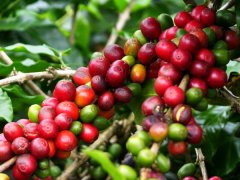
Since coffee trees are tropical plants, they need to be planted in warm places. The main planting area is distributed between latitude 25 south and latitude 25 north with the equator as the center, so this area is also called the coffee belt. However, even in the coffee belt, Arabica and Robeska do not grow in exactly the same area, but grow up in an environment that is more suitable for their own growth.

Which countries and regions can grow coffee? Why?
Since coffee trees are tropical plants, they need to be planted in warm places. The main planting area is distributed between latitude 25 south and latitude 25 north with the equator as the center, so this area is also called the coffee belt. However, even in the coffee belt, Arabica and Robeska do not grow in exactly the same area, but grow up in an environment that is more suitable for their own growth.

How to grow coffee beans? how to grow coffee beans under suitable planting conditions and how to breed excellent flavor?
Professional coffee knowledge exchange more coffee bean information please follow the coffee workshop (Wechat official account cafe_style) front street-coffee bean planting belt Coffee production belt (coffee production zone) is between 25 degrees north latitude to 30 degrees south latitude, including Central, West Africa, Middle East and South Asia, the Pacific, Latin America, the Caribbean many countries. Why is coffee growing?